Key Takeaways:
With the Chinese New Year arriving on February 17, global beauty brands are saddling up for one of the biggest holidays in China—and one of the most critical retail seasons of the year. During the first seven days of last year’s festival, China’s payment networks processed over 22 billion transactions worth $1.18 trillion, capturing a surge in consumer activity across retail, travel, and service sectors.
Brands are leaning heavily into this year’s zodiac, the fire horse, symbolizing action, freedom, and power. Bobbi Brown released a gold eyeshadow quad in a compact adorned with red horses; Lush delivered horse-shaped bath bombs and massage bars; and Byredo designed campaign visuals inspired by the Dala horse, a traditional Swedish handcarved statuette.
But as the Chinese market becomes more crowded, it’s not enough to rely on red hues and zodiac motifs alone. To stand out, brands will need to ramp up their creativity, from tapping into the country’s intangible cultural heritage to transforming packaging into coveted collectibles.
Here are the beauty brand campaigns riding strong into the Chinese New Year, and why experts say they’re resonating with consumers.
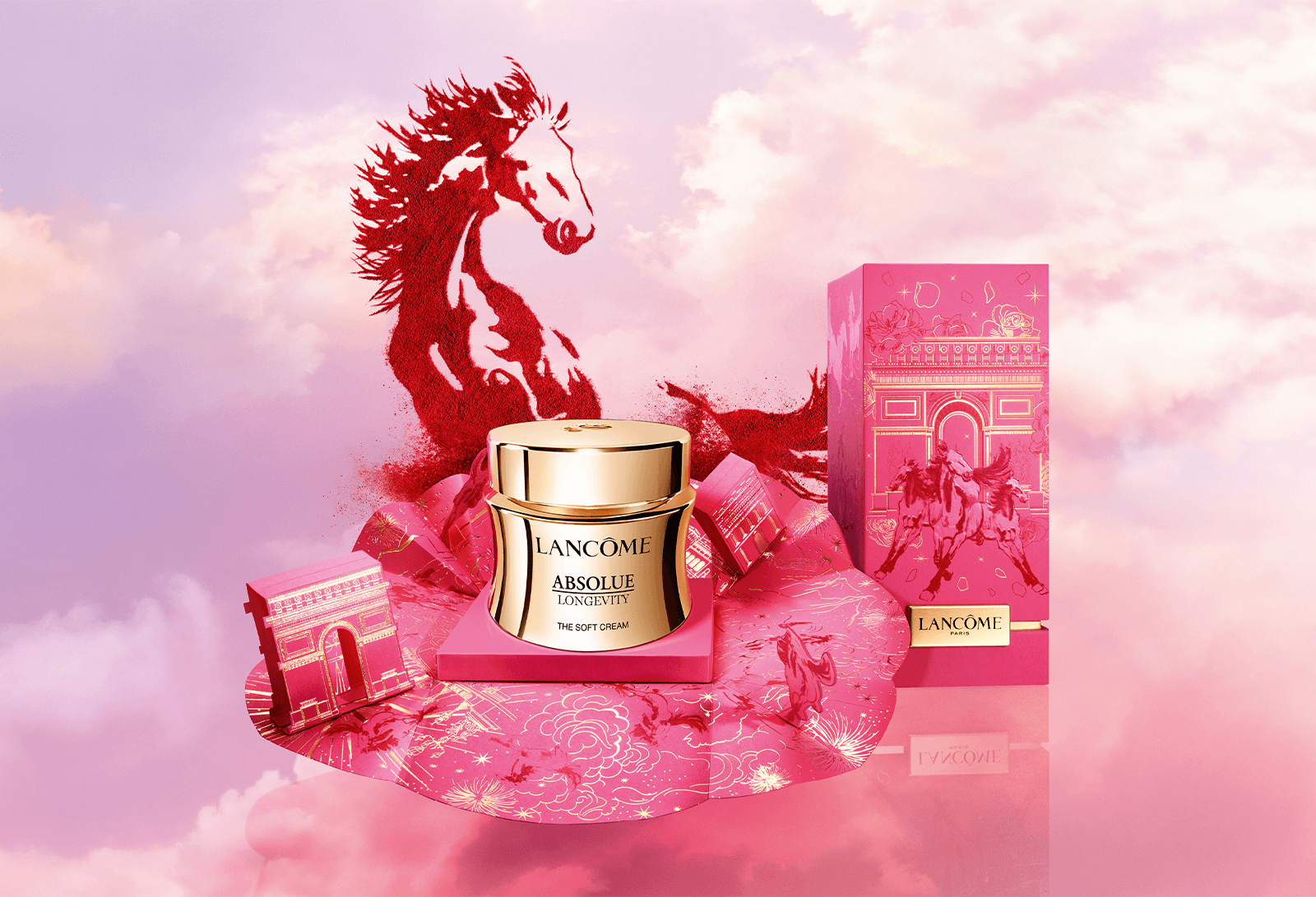
Lancôme: Merging Art, Culture, and In-Person Experiences
What: The L'Oréal-owned cosmetics house is ringing in the Year of the Horse with parties across five Chinese cities: Chengdu, Suzhou, Shanghai, Shenzhen, and Hangzhou. The celebration kicked off in Chengdu on January 15 with a star-studded launch event before opening to the public the following day.
Breaking from the typical mall venue, each pop-up was staged at an iconic local site to reflect the character of its host city. For example, the Chengdu event took place at Daqi Teahouse, a repurposed 50-year-old lacquerware factory, while the Suzhou activation was held at Panmen Scenic Area, the site of an ancient city gate. Across locations, guests could participate in activities such as mahjong, New Year fortune draws, and traditional sugar painting, encouraging deeper cultural immersion.
At the same time, Lancôme collaborated with the Xu Beihong Foundation to present a special exhibition of world-acclaimed artist Xu Beihong, best known for his brush-rendered paintings of horses. His work, Run Off the Ground, made its public debut and was incorporated into the brand’s limited-edition packaging, designed as a pop-up art piece in Lancôme’s signature pink.
Why It Works: “Lancôme really understood their assignment this year and simply let each city express its own version of the theme. By building around recognizable behaviors like writing a wish or drawing a fortune, the campaign landed naturally across regions,” said Ludovic Bacque, Senior Advisor at Daxue Consulting, a market research and strategy firm focused on China.
Guerlain: Embracing Craftsmanship and Collectibility
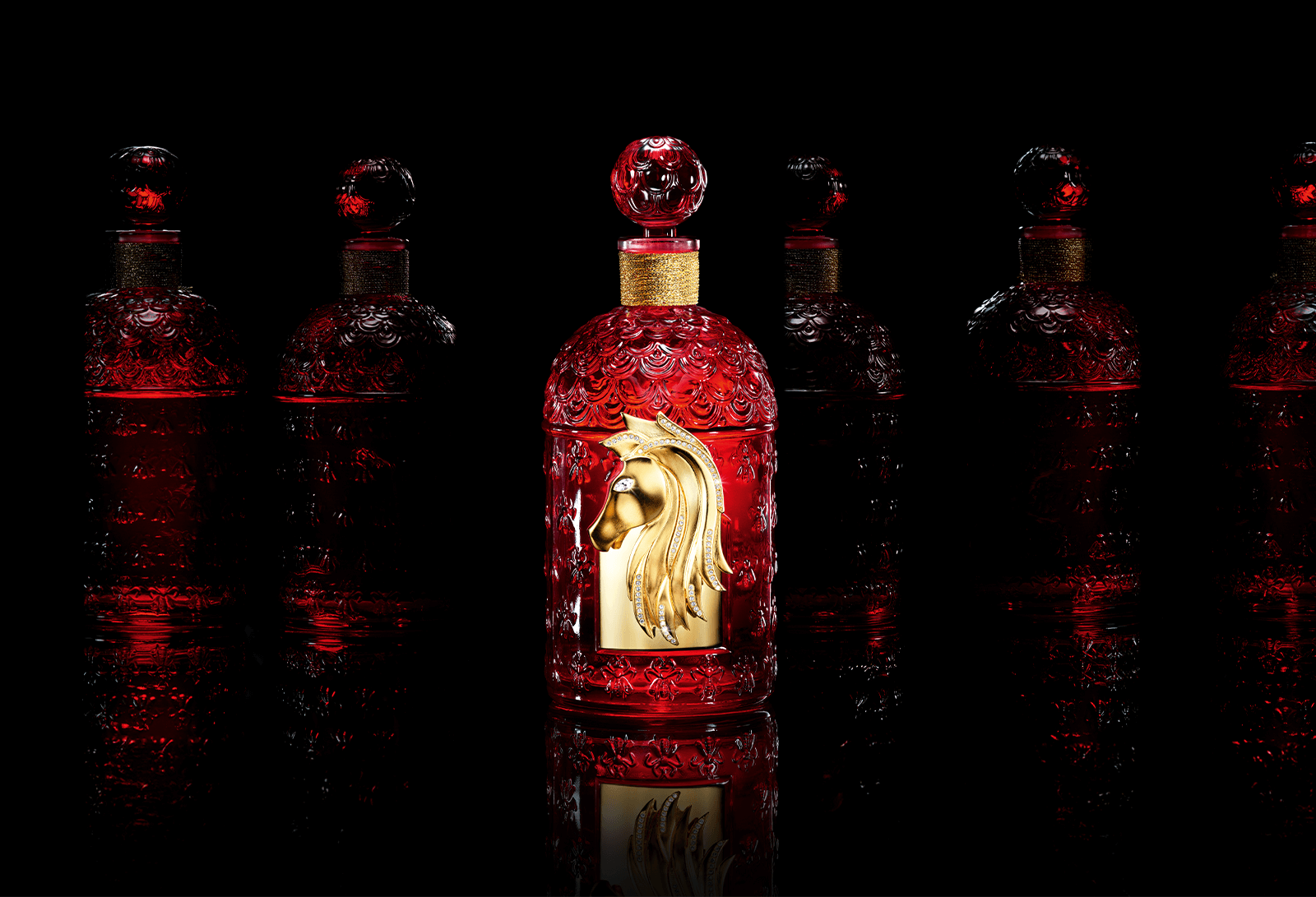
What: Bridging the worlds of high-end perfumery and jewelry, Guerlain teamed up with Paris-based jeweler L’Atelier Truscelli to put a fresh spin on its own iconic Bee Bottle. This year’s edition arrives in a lucky scarlet red and is adorned with a horse’s head gilded in 24-carat gold and set with 78 Swarovski crystals. The Eau de Parfum, Rouge Bonheur, is exclusive to the holiday and exudes tangy notes of pepper and ginger. Limited to 1,785 numbered pieces, the item is positioned as a collectible for luxury connoisseurs.
The LVMH-owned label also brought the festivities to life with a party in Shanghai on January 12. Themed “Winning Gracefully, Entering the New Year,” the event unfolded as a game-driven experience, inviting guests to create auspicious totems, explore Chinese handicrafts, and win prizes. Attended by a host of celebrities that included Song Weilong and Zhou Yiran, the party drummed up buzz while bolstering Guerlain’s cultural storytelling.
Why It Works: “What works for Guerlain is that the campaign positions the Year of the Horse edition as a collectible rather than a festive item. The focus is more on craftsmanship and the brand’s heritage, which makes the product feel more like an object to be kept than a seasonal celebration. That feels more refined and more desirable for Chinese luxury consumers today,” said Miro Li, founder of Double V Consulting, a brand consultancy firm based in the China Greater Bay Area.
Herbeast x Pane: Finding Complementary Collaborators
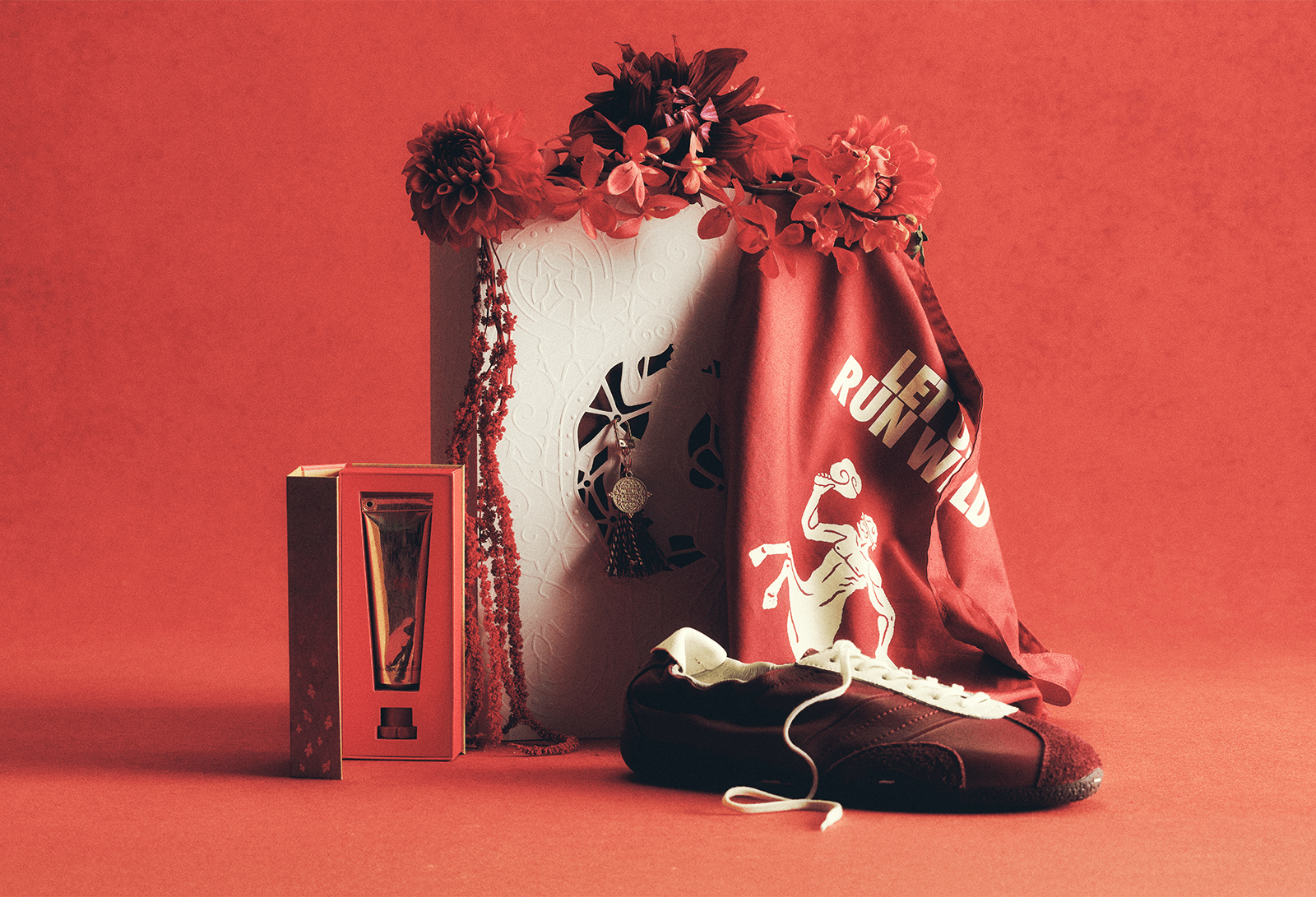
What: In an unexpected pairing, Shanghai-based herbal skincare brand Herbeast joined forces with Chinese premium footwear brand Pane to launch a holiday gift set. Themed “Let Us Run Wild,” the brands examine the relationship between the hands and feet—two instruments of movement—and encourage consumers to charge into the new year with courage.
The set includes a pair of co-branded sneakers, one of Herbeast’s newly launched Highland Hand Creams (which comes in three scents), a travel-sized version of its Reishi multi-repair oil serum, and a charm, which can be attached to the hand cream or shoelaces. Designed almost like a mini adventure kit, it blends practicality with playfulness, exploration with everyday ritual.
Why It Works: “Pane and Herbeast each bring a clear role into the narrative: footwear enables movement and exploration, while hand and foot care speaks to recovery and self-care. Together, they tell a coherent story about action and care: going out into the world, but also looking after yourself. That balance is increasingly important in China, where self-care has become a serious cultural value,” said Sophie Coulon, Managing Director at VO2 Asia Pacific, a Shanghai-based digital consultancy.
To Summer: Balancing Nostalgia and Modernization
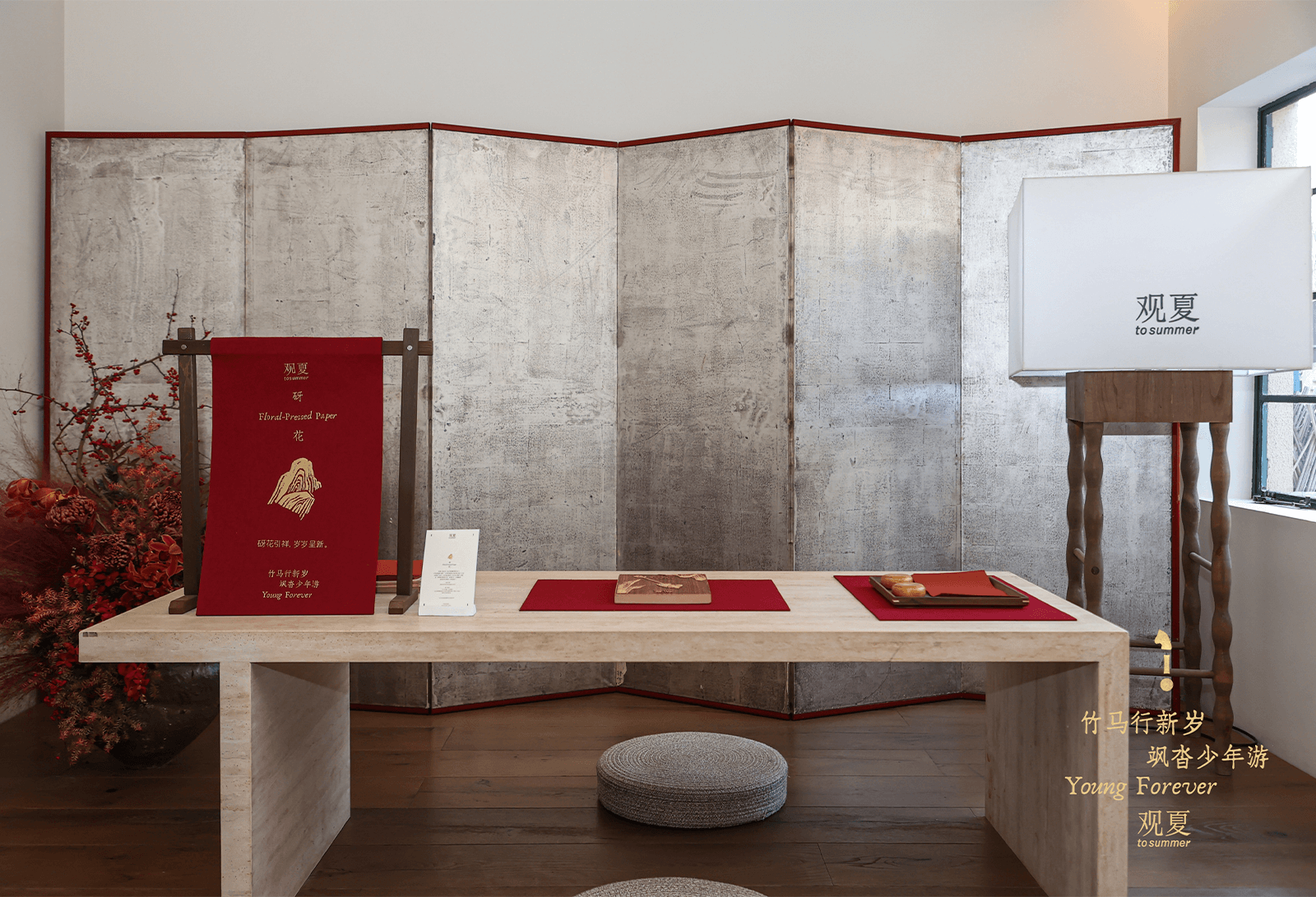
What: Themed “Young Forever,” the Chinese fragrance brand’s latest campaign is an ode to youthful adventure. The campaign video features a child learning from two artisans: Wang Qiyang, a Gen Z sugar painting artist, and Ren Helin, a woodblock artist born in the 1940s. As Wang carries on the Ming Dynasty–era craft of sugar painting, Ren is shown learning Photoshop, a contrast reinforcing the brand’s message of embracing adventure at any age.
From late December through January 31, To Summer welcomed shoppers to its Shanghai, Beijing, and Guangzhou stores to take part in the fun. Guests could pick up a bamboo horse lantern, play games, and savor a sugar painting. The brand also released three seasonal candles—Lucky Persimmon, Winter Berries, and Spring Garden—designed to evoke nostalgia for winter sweets and hope for the changing season.
Why It Works: “What makes [To Summer’s campaign] particularly effective is how it captures the essential duality of Lunar New Year itself: this moment when families unite to honor tradition while simultaneously welcoming renewal…. Lunar New Year campaigns often run the risk of falling into one of two traps: empty nostalgia or forced modernization. To Summer has struck a good balance here,” said Olivia Plotnick, Founder of Wai Social, a Shanghai-based social media marketing agency.
Documents: Abstracting the Zodiac
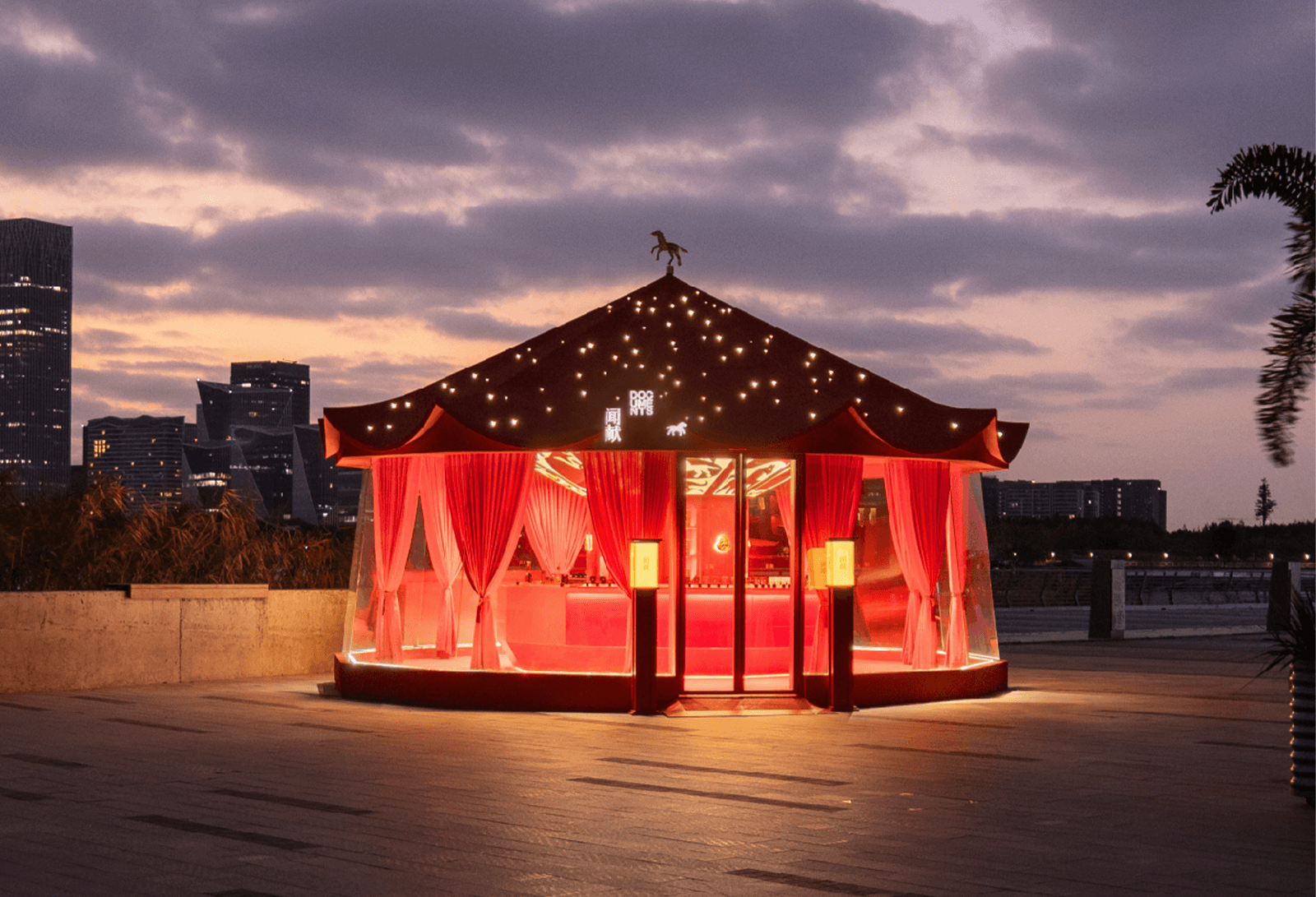
What: Rather than depicting the horse directly, Chinese fragrance label Documents interprets the zodiac through design, scent, and experience. Its new extrait de parfum, Horse, features a bottle inspired by traditional mortise-and-tenon joinery, embodying the animal’s strength, while its fragrance blends hay, pine tar, and sea buckthorn, conjuring images of the windswept grasslands in which it roams.
Offline, Documents further honored the spirit of the horse with a pop-up at Shanghai Gate M Dream Center, which opened on December 11. Now in its second year, the “Red House” space combines an Eastern yurt with a Western carousel, with horse motifs and Eastern knot elements woven throughout to enhance its cultural symbolism.
Why It Works: “This campaign resonates with Chinese consumers because you can read it at so many levels. It is immediately unique and eye-catching. It unfolds like an immersive story. But if you look closer, you can also enjoy at a deeper level all the details and the care that went into the creation. At the end, the unique universe of Documents is showing through,” said Dao Nguyen, founder of Essenzia ByDao, a boutique fragrance marketing agency.
Kans: Creating Content that Travels
What: While other brands tap into nostalgia and nature, Kans is capitalizing on the absurd. After naming actress Ma Sichun its Year of the Horse global partner, the Chinese skincare brand released a short video built on puns of her name (Ma means horse in Chinese), silly graphics (think horses riding pink motorcycles), and a catchy soundtrack. Since its release, the video has garnered 6.2 million views on Weibo.
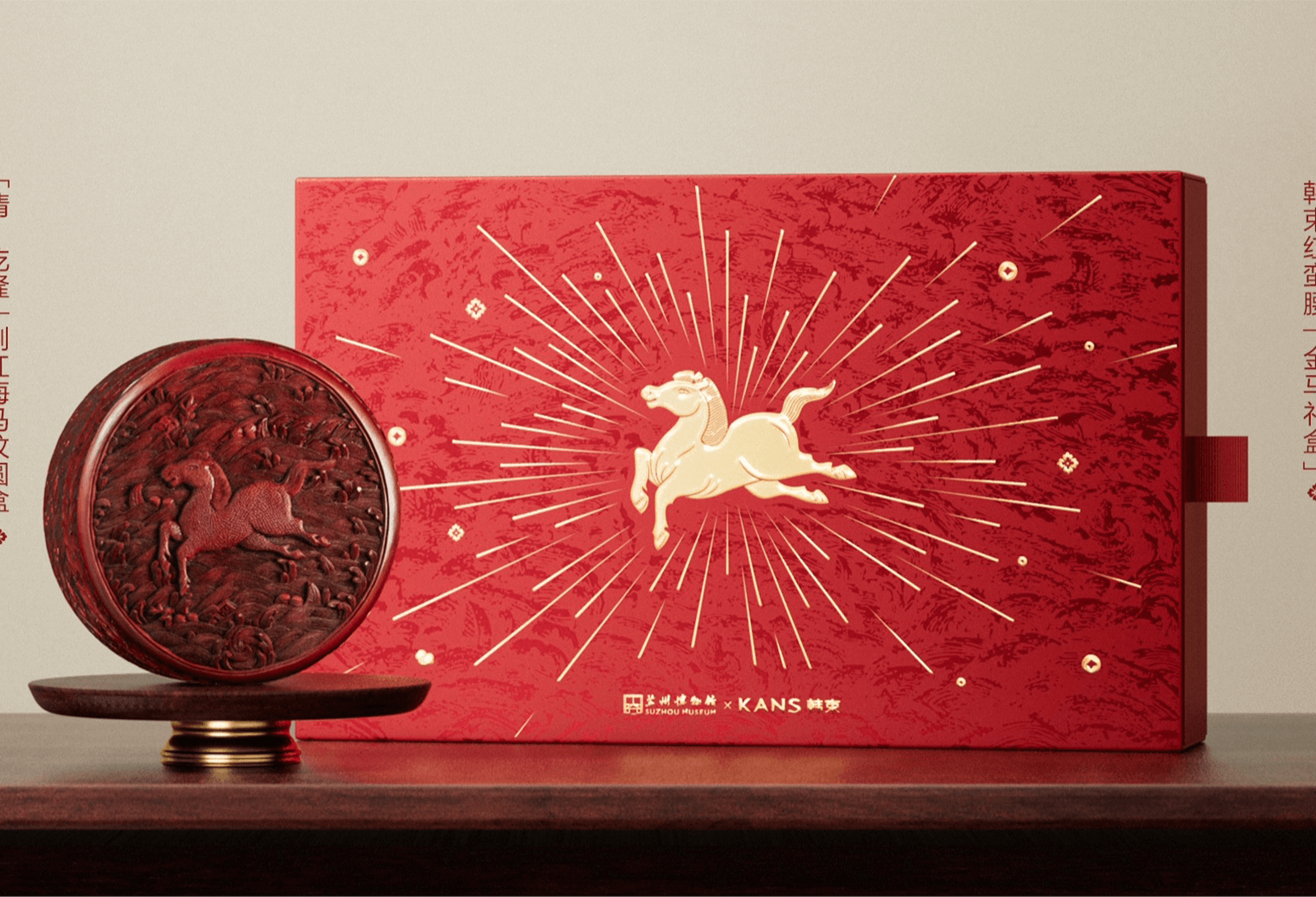
To convert that attention into commerce, the brand partnered with the Suzhou Museum on a gift box inspired by the Qing Dynasty relic, “Red Seahorse Pattern Round Box.” The set anchors the campaign in culture, elevates the mass brand’s image, and provides a collectible item for gifting and sharing.
Why It Works: “Instead of treating Chinese New Year as a solemn brand story moment, Kans turns the Year of the Horse into a platform-native entertainment format with rapid puns, a hooky soundtrack, and a lead talent choice that makes the whole thing feel like pop culture first, advertising second. That self-aware humor matters: audiences are saturated with zodiac clichés, so the campaigns that travel are the ones that behave like memes,” said Arnold Ma, founder of Qumin, Europe’s first Chinese digital creative agency.
The Big Picture: Global vs. Local Playbooks
Even as global brands raise the bar creatively, there’s still a structural difference that sets local rivals apart, said Li. For many multinational companies, Chinese New Year–only editions still need to be globally legible, low-risk, and scalable.
“As a result, the zodiac animal is often translated into broadly universal ideas like luck, strength, or prosperity,” she explained. “The visuals are polished and emotionally reassuring, but they rarely tap into the more personal, culturally embedded meanings Chinese consumers associate with these symbols.”
In contrast, local players like To Summer and Documents treat the Year of the Horse less like a festive motif and more like an internal cultural language.
“They draw on ideas such as youth, memory, companionship, or personal journeys. These are references that don’t aim to be universally understood. Their appeal lies precisely in the fact that they feel intimate and culturally untranslated,” she continued.
As brands prepare for China’s bustling holiday calendar, success won’t come from creativity alone, but the ability to operate within the culture itself.

Want to continue reading this article and others just like it?
Subscribe to BeautyMatter and access the most current beauty intelligence and news updates.
SubscribeAlready a member, login here.