





Key Takeaways:
With a laser focus on sourcing renewable ingredients and protecting the planet, Davines was seriously ahead of its time when the Parma, Italy–based professional haircare line launched in 1993 with the tagline “Sustainable Beauty.”
Today, not only has the “sustainable” descriptor become ubiquitous, it’s also virtually meaningless—a nebulous catchall phrase for brands that often use just a smattering of plant ingredients and exhibit little to no environmental stewardship.
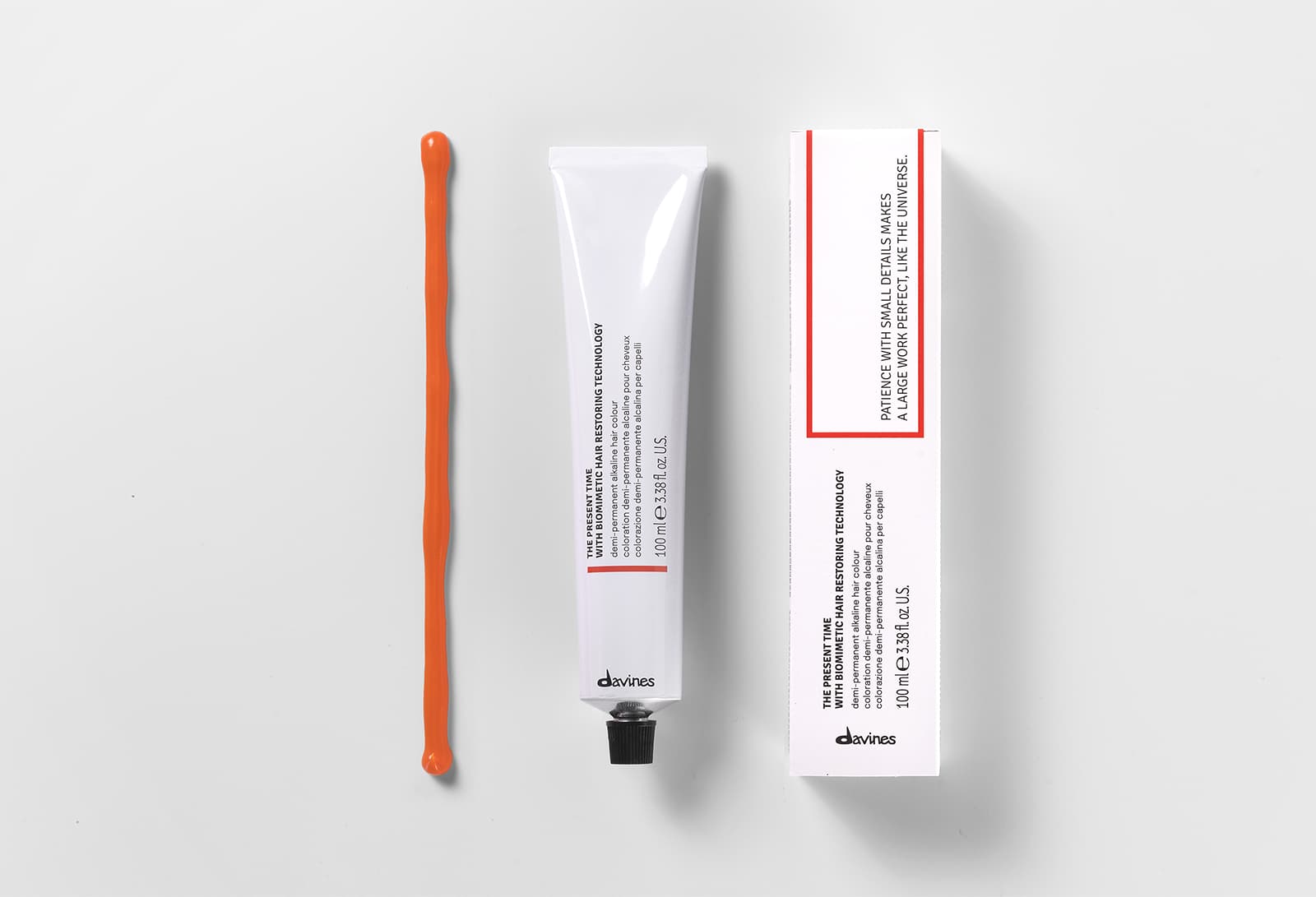
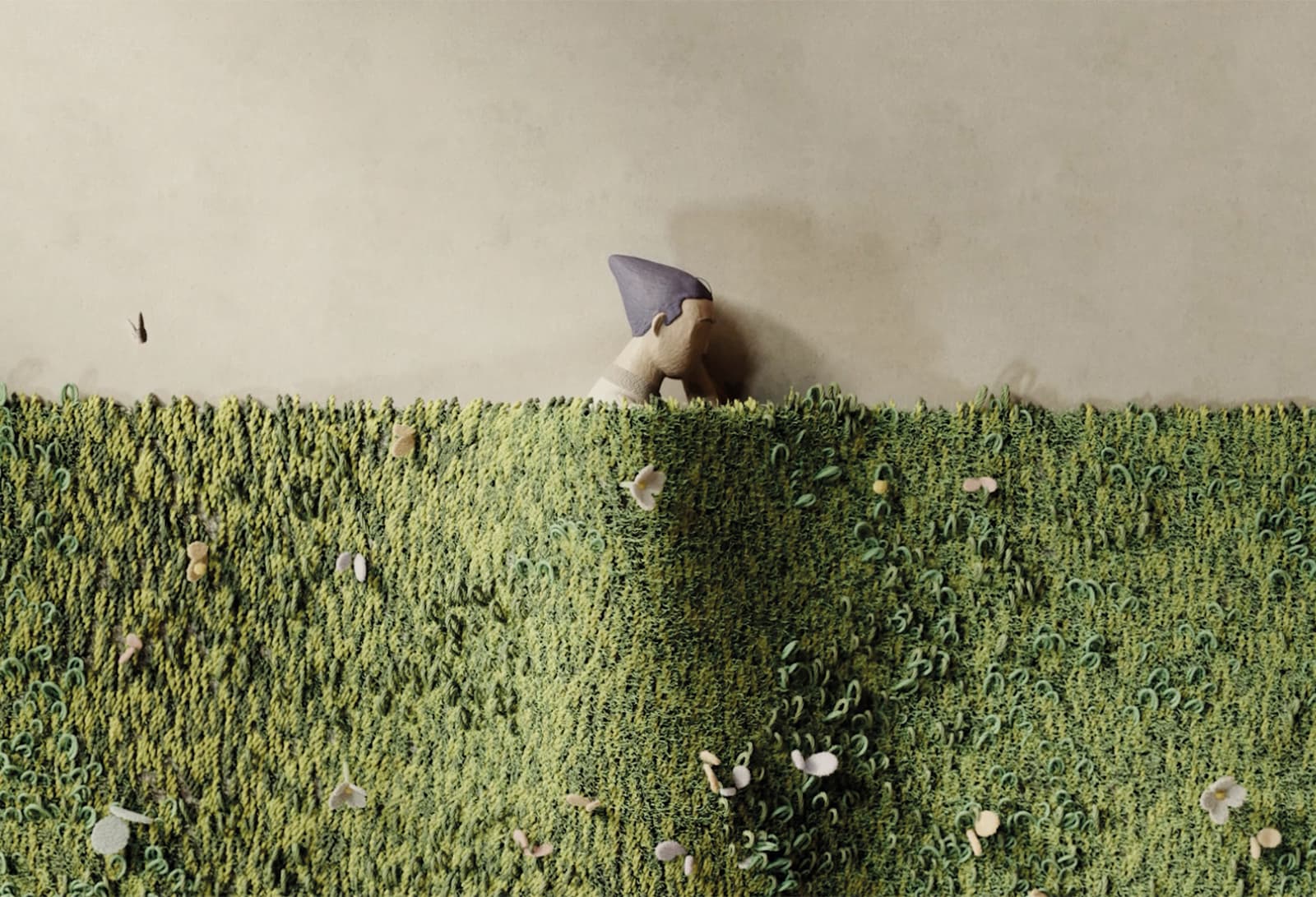
How has Davines reacted to this now-overpopulated “sustainable” landscape? By shifting gears to the tagline “For a Good Life,” its first update in 20 years. Supported by an array of arts & crafts–vibe visual assets, the motto has been anchored in a 3D-animated video conceptualized internally by the Davines creative team and executed by an outside agency.
The “stars” of this high-concept mini film? Davines founder and Chairman Davide Bollati describes them as “benevolent forces, or spirits,” engaged in constant “regenerative actions” that support and care for people’s lives. As depicted in the video and accompanying ad campaign, their wholesome tasks include sewing a blanket, baking bread, and hanging clothes on a laundry line. Yes, one of these “spirits” is also “making clouds,” but those fluffy formations are created from no less than the tears of humanity.
If this all sounds like a massive departure from standard-issue “sustainability speak” about ingredient traceability and biodegradable packaging, that’s by design.
“Since creating our tagline ‘Sustainable Beauty’ more than 20 years ago, the world's focus has shifted immensely,” Bollati told BeautyMatter. “Environmental sustainability has become saturated, and, with this shift, some of the pioneering distinctiveness of ‘Sustainable Beauty’ has been lost, although the brand’s sustainability efforts continue to increase as an immovable pillar of the brand."
Hence the move in a more iconoclastic direction.
“‘For a Good Life’ invites people to rediscover balance—with the planet and with one another—shifting the focus from individual benefit toward a more integrated view of environmental, economic, and social well-being,” said Bollati. “It encourages everyone to embrace all aspects of life, including its complexities, as part of a more conscious and connected way of living.”
Beyond the Davines official Instagram account, where the campaign kicked off in February, the brand rolled out a one-month global paid media investment encompassing print and digital editorials, in Italy, the US, France, Germany, and the Netherlands.
Alongside rebranding itself externally with this new campaign, Davines remains committed to the internal mission of not only maintaining profitability but actually scaling while maintaining its own lofty sustainability goals.
Bollati admits this hasn’t been easy. At times, he said, Davines has even had to accept a lower margin in the short term to ensure it stays aligned with its sustainability commitments. “For us, purpose is always the starting point,” he noted. “Every initiative, every project, every strategic decision is evaluated through that lens.”
While he can understand the urge to cut corners when a brand is facing economic headwinds, Bollati said that for Davines, that isn’t an option.
“The biggest challenges to profitability, especially in the last five years, have come from the social and economic instability affecting markets worldwide,” Bollati shared. “Fluctuating consumer confidence, rising costs of raw materials, geopolitical uncertainties, and global disruptions have all created pressure on margins and made everything more complex.”
In the face of global instability, Bollati believes it’s more important than ever for brands to double down on core values. For Davines, that’s sustainability and product quality. “People recognize and respond to authenticity,” he said. “When consumers see a brand that remains coherent, transparent, and responsible—especially when the world around us is unstable—trust grows. And that trust turns into loyalty, which is one of the strongest drivers of sustainable profitability.”
Central to the brand’s quality-control mission is Davines Group Village, a corporate-owned, carbon-neutral compound comprising a Scientific Garden, a Greenhouse, and a Green Kilometer. Also serving as corporate headquarters and home to the company’s Research & Innovation Laboratories and production and manufacturing facilities, this is where roughly 600 employees clock-in each day. (Worldwide, another approximately 400 Davines staffers are sprinkled among the company’s nine branches in New York, London, Paris, Dusseldorf, Deventer, Bilbao, Shanghai, Hong Kong, and Mexico City.)
The 3,000-square-meter Garden, inspired by the UNESCO World Heritage site in Padua known as the Garden of Simples” and designed with proportions that nod to Leonardo Da Vinci’s Vitruvian Man, is cultivated using the company’s regenerative organic farming methods. The Greenhouse contains species that aren’t adaptive to the region’s climate but are nonetheless useful for laboratory research. And the Green Kilometer, a tree-lined belt, offsets harmful emissions from cars.
“The inauguration in 2018 of the Village was one of the great milestones of our journey,” said Bollati, recalling the family-owned company’s humble 1980s roots in its basement and garage. “It took many years, as we wanted to build a concrete representation of our values as a company.”
Tapping Italian architects Matteo Thun and Luca Colombo for the core structures and incorporating the expertise of London-based landscape specialists del Buono Gazerwitz for the green areas, the Village is considered one of the most visually and philosophically compelling workplaces in the country.
But as stunning and productive as it is, the Village is limited in terms of the ingredients it yields for the brand’s wide range of products. And that’s where the Davines alliance with Rodale Institute, an agricultural research and education nonprofit in Pennsylvania, comes into play. In 2021, the two entities collaborated on the European Regenerative Organic Center (EROC), situated directly across from the Davines headquarters.
A field spanning 17 hectares (approximately 42 acres), EROC is the site of experiments that compare and contrast conventional and regenerative organic agriculture (ROA) methods. So far, the partnership has yielded yarrow and calendula, which Davines tapped for a shampoo and a combination hair, face, and body butter.
Even more importantly, EROC is helping to further the Davines mission to bolster true, legitimate sustainability. “Through EROC, we aim not only to investigate the benefits of ROA, but also to carry on advocacy activities, through which we can inspire partners, organizations, institutions, universities, and farmers to embrace these practices,” said Bollati. “Hopefully, together, we can create a supply chain for ingredients that ensures ever growing sustainability.”

Want to continue reading this article and others just like it?
Subscribe to BeautyMatter and access the most current beauty intelligence and news updates.
SubscribeAlready a member, login here.