





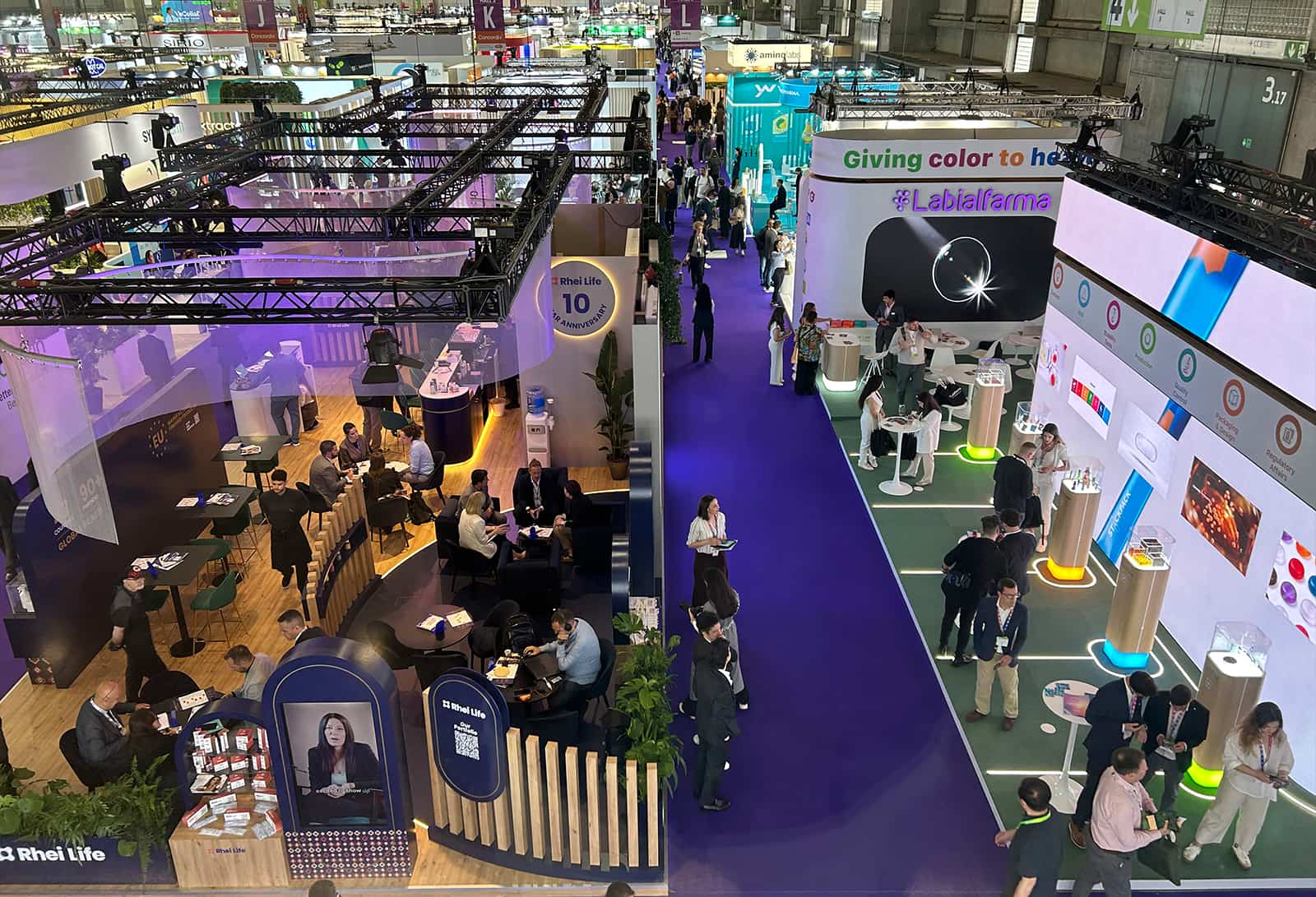
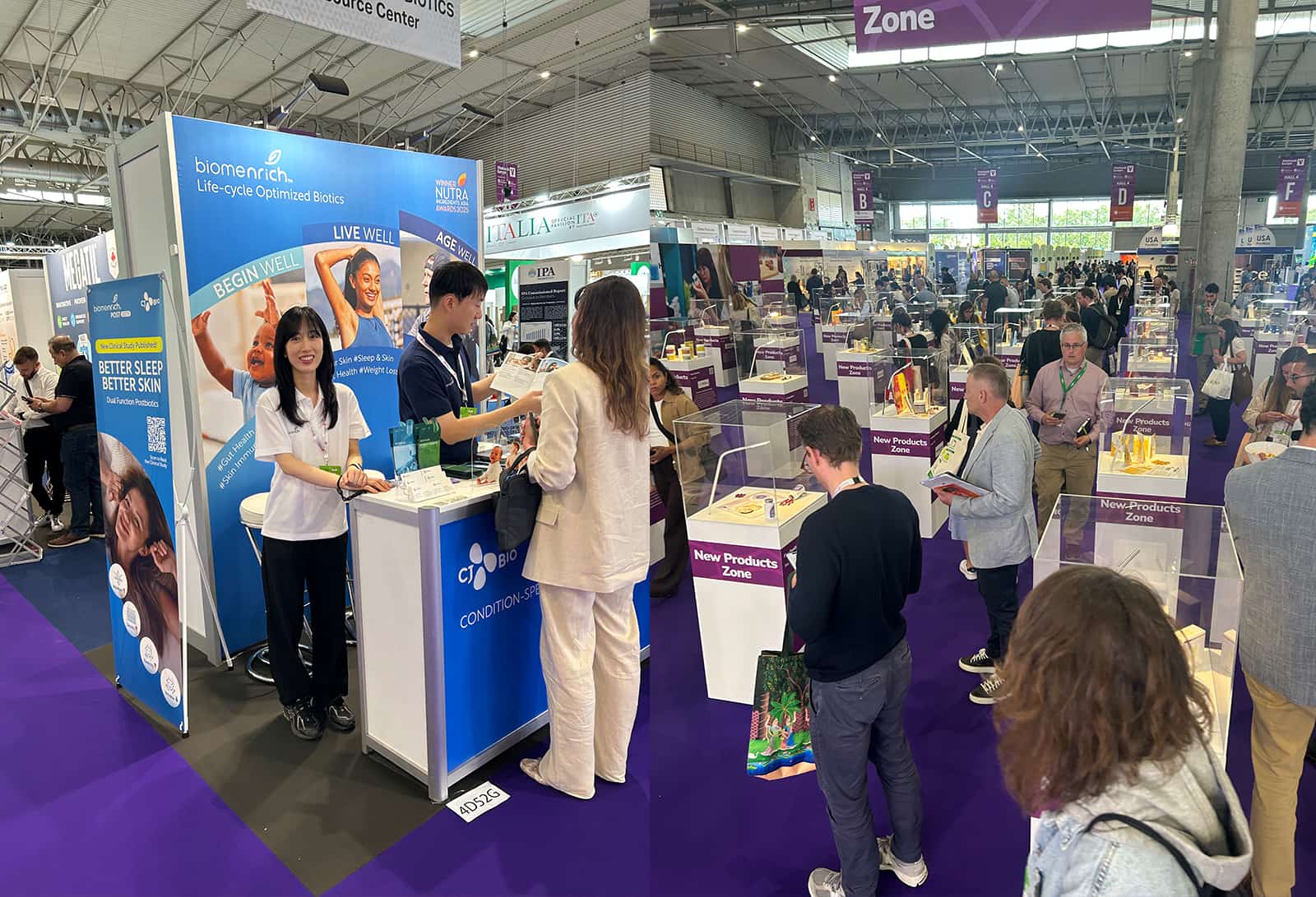
Vitafoods Europe is not a consumer event. It is the place where the global supplement industry decides what it believes in—where ingredient suppliers present the science, where contract manufacturers reveal what brands are actually requesting, and where finished product launches offer the first commercial proof of which trends have enough conviction behind them to ship. The 2026 trade show, held in Barcelona, was the largest to date: 1,600 exhibitors, more than 30,000 attendees from 135 countries, a 22% expansion in floor space, and 47 new product launches in a dedicated New Products Zone.
BeautyMatter conducted 25 on-camera interviews across the show floor with founders, formulators, ingredient scientists, and brand strategists. The conversations covered the same structured questions: biggest trends, rising ingredients, changing consumer preferences, differentiation strategies, and the strength of the science behind the claims. What follows is a summary of what the data, the products, and the people behind them are collectively signaling about where the industry moves next.
Seven of the 47 launches in the New Products Zone targeted brain function, cognitive performance, or mental energy—making it the second most represented category after gut health and the one with the widest range of ingredient approaches.
The ingredient diversity tells the story. Slovenia-based Permacon launched Memory Magtein PS, built on Magtein or magnesium L-threonate, one of the few magnesium forms that crosses the blood-brain barrier—combined with Actiserine, a catechin-complexed phosphatidylserine designed for enhanced bioavailability. Israel-based Concordix by Vitux presented Perform-X Mind, using enXtra from Alpinia galanga for sustained, non-stimulant mental energy in a chocolate-orange chewable. China-based Biosan debuted an organic lion's mane dual extract, low temperature dried to preserve hericenones and erinacines at standardized concentrations—a maturity signal for an ingredient category that until recently had no quality benchmarks.
What emerged from the interviews is that creatine, historically confined to gym culture, is central to this cognitive shift. A representative from Best Protein, a Spanish manufacturer, described the transformation. "Before, creatine was a supplement that was used mostly for sports people and fitness consumers. And now even my mom is taking creatine for the mind,” they told BeautyMatter. “They launched different studies showing the benefits of taking creatine to prevent Alzheimer's and dementia, and to improve cognition. And now in a pharmacy, even in a supermarket, you can buy creatine very easily."
Israel-based Naveh Pharma's Be Focus Plus pairs creatine with saffron extract, minerals, and B vitamins specifically for cognitive function with no sports claims at all. A representative from Nutriluv, a German gummy manufacturer, reinforced the direction. "Creatine was very sport-related, but now with the studies coming from cognitive health, especially for elderly people, and the trend of longevity, I feel like that is the next big thing."
For brands entering this space, the competitive challenge is specificity. Generic "brain health" positioning is already crowded. The products gaining attention at Vitafoods were the ones targeting a defined cognitive use case—focus without caffeine, memory support through blood-brain barrier crossing, neuroprotection through standardized mushroom compounds—with a distinct mechanism behind each claim.
Nine products in the New Products Zone addressed some dimension of gut health, making it the single most represented category. But what was notable is that almost none of them looked or sounded like each other. The era of the general-purpose probiotic is giving way to targeted interventions designed for specific clinical scenarios, consumer segments, and overlapping health conditions.
Italy-based PharmExtracta launched Brevicillin Drops, a probiotic built around a single bacterial strain that survives the most commonly prescribed antibiotics—designed for infants and children to protect their gut health while taking antibiotics, not just after.
At the opposite end of the spectrum, Spain-based Irati International introduced Symbiotic Gummies—combining probiotics, prebiotics, postbiotics, and zinc in a dragon fruit and pomegranate gummy with 24-month, room-temperature stability. The "symbiotic" framing, rather than simply "probiotic," reflects a category that is beginning to define itself by the completeness of its microbiome approach rather than by strain count alone. But shelf stability claims deserve scrutiny. Peter Desveaux from Canadian manufacturer Herbaland described the gap between label and reality. "A lot of companies do not actually do stability, so you do not know after a year if the claim is actually real. We have a two-year shelf life, and we have all the stability data to support that."
Soohyun Paik from CJ BIO's Biomenrich platform described a structural shift toward postbiotics during an interview with BeautyMatter. "A lot more people are looking for postbiotic ingredients rather than probiotics. There are limitations in terms of probiotic distribution and also the shelf life. Postbiotics are more open to different innovations because they are versatile—they can be incorporated into liquids, gummies, you name it. And since they can be distributed at room temperature, [they are] much easier to work with."
Leonid Coloma from Enzymedica introduced a separate argument—that enzymes are the overlooked prerequisite for gut function. "I may have the best intestinal flora, but if I am not digesting my food properly, I am back [to] square one. The big difference with enzymes is that you get the results right away. Someone that is very sensitive, one enzyme, they do not get bloated."
The strategic read is that gut health is becoming infrastructure. The brands with the strongest positioning will be those that stop selling "gut health" as a benefit and start selling it as the mechanism that enables their cognitive, beauty, immune, or metabolic claims to work.
Five products in the New Products Zone were formulated specifically for women's biology, covering menopause, vaginal health, urinary tract support, and prenatal nutrition. What distinguished them from earlier generations of women's supplements was the density of branded, clinically studied ingredients in each formula.
Belgium-based KeyPharm Laboratories launched Physalis FemLibre Forte—a perimenopause complex combining hop extract for hot flashes, saffron for emotional balance, mango powder, shatavari, and skullcap extract in a single formula built on five clinically studied ingredients. France-based Laboratoire CCD debuted MÉNOCIA Libido, combining ginseng and Tribulus terrestris for desire with hyaluronic acid for vaginal comfort, citing a study in which 88% of participants reported improved lubrication.
Bulgaria-based VenusRoses Labsolutions presented The MenoP v.2, a 30-day menopause protocol delivering Zynamite, Lifenol, and Serenzo in microcapsules suspended in Bulgarian Rose damascena oil—paired with a companion tracking app.
Mathias E.H. Madsen from Cell Biotech, South Korea's largest probiotics exporter, identified women's health as the dominant demand signal. "Menopause, women's health, and vaginal health—that is the biggest trend." Coloma from Enzymedica reinforced the point from a market perspective. "It is not only because it is for women; it’s because women are the door to the supplement into the household."
The interview data reinforced this from multiple angles. A representative from Norway-based Vitalis Pharma described women's health as a visible shift. "Women's health is starting to be more of an attraction. We can see at our booth as well that the women's products and even children's products with omega-3 are starting early, at an early age." Ireland-based ABC Nutritionals, a contract manufacturer, identified saffron extract as a breakout ingredient in this space. "One ingredient that we found [works] very well is a saffron extract. What it does is it monitors the cortisol during a woman's monthly cycle and keeps the stress hormone away for as long as possible."
For the beauty industry specifically, the convergence between menopause support and beauty-from-within is already visible. The brands that treat women's health as a serious formulation category—rather than a pink-packaged afterthought—will define what this market looks like in two years.
The word "longevity" appeared across multiple categories at Vitafoods Europe 2026: in cognitive products, beauty launches, and gut health formulations. But the dedicated longevity products on the show floor revealed a critical evolution: the move from broad anti-aging positioning to formulations targeting specific, named biological mechanisms of aging.
Romania-based Secom Healthcare's Good-Aging formula is the clearest example. Rather than claiming to support "healthy aging" in general terms, it targets nine recognized hallmarks of aging through a combination of MGCPQQ, carnosine, vitamin B3, fisetin, spermidine, apigenin, and trans-resveratrol—each selected for documented roles in mitochondrial function, NAD+ levels, cellular energy, or autophagy. A representative from Good Routine told BeautyMatter, "Each ingredient sticks to a hallmark of the aging nine pillars. I don't think that the users are still fully aware of it. Science is advancing quite rapidly."
Lithuania-based Domus Naturae launched a three-capsule Adaptive Cellular System—notable not for any single ingredient but for its protocol format, designed to address cellular vitality, metabolic balance, and restorative recovery as three interdependent systems rather than isolated claims.
René Pfneiszl from Prof. George Birkmayer NADH, whose research spans decades, described the foundational principle during an interview with BeautyMatter. "If you can improve the repair process in your cells, that means that you have more vital cells for longer. And that is exactly what longevity is all about. You really work on longevity on a cellular level—on the very most basic component of your body because your body is just cells."
The bioavailability dimension of longevity ingredients is also advancing—and increasingly becoming a differentiator in its own right. Belgium-based BRONN, whose patented Absorptix technology focuses on maximizing absorption of cellular energy ingredients, including NAD+ precursors, represents this conviction from the brand side. Philip Caerts, BRONN's founder, described the shift during an interview with BeautyMatter. "The future of supplementation is not simply about intake, but about uptake—how efficiently the body can actually absorb and use active ingredients. Consumers are becoming increasingly educated and understand that many supplements contain good ingredients, but not all formulations are effectively absorbed."
The commercial implication is that "longevity" as a label is losing its power. What is gaining power is the ability to name the mechanism—mitochondrial support, NAD+ optimization, senescent cell clearance, autophagy activation—and connect it to a specific consumer experience. The brands that can do this translation will separate themselves from a positioning claim that is rapidly becoming commodity language.
Spend an hour in the New Products Zone and one thing becomes obvious: The way a supplement is delivered now matters as much as what is in it. Twist-off liquid capsules. Tablets that release ingredients over eight hours. Powders that dissolve on your tongue. Chewable shells filled with liquid ginger. Sugar-free soft chews. Microbeads that control exactly when nutrients hit your system. The competition is no longer just about ingredients—it is about how those ingredients reach the body.
France-based NaturaCare launched three products at the show, and each one told its story through format as much as formula. Drinkaps is a twist-off capsule that delivers a single dose of liquid, biodegradable, with no preservatives. Flex & Mind Extend is a two-layer tablet that supports joints and brain function in one daily dose, releasing ingredients slowly over eight hours. Digest Fizz is an effervescent tablet for everyday digestive comfort, combining plant extracts with prebiotics and digestive enzymes.
Desveaux from Herbaland described how format differentiation is driving commercial traction. "We always did gummies before, only, and it kind of became saturated. Now, a lot of people said they saw our jelly sticks, and it really catches their eye because it is something new. Having those different forms has really attracted people to our booth."
The gummy question dominated the discussions, but the consensus was more nuanced than a simple "gummies are winning." Madalina Ghita from Good Routine offered a European perspective. "I see a lot of gummies present, but I don't think the consumer interest in Europe is on a hype for this kind of administration format. At least not the educated one, because it is rather indulgent. They are thinking about the sugar behind the product.” Instead, Ghita says consumers are leaning toward powders and liquids.
The implication for brands is that format innovation is no longer a packaging decision made after the formula is finalized. It is a strategic choice that determines bioavailability, daily compliance, consumer perception, shelf stability, and ultimately whether the clinical claims are ever realized. The format is not the wrapper. Increasingly, it is the product.
Three products in the New Products Zone were designed explicitly around GLP-1 medication users—a small number in absolute terms, but a significant signal given that this category did not exist at Vitafoods 12 months ago.
France-based Laboratoire PYC launched GLP-1 SLIM+, a supplement designed to support appetite control and metabolic balance, paired with high-protein, low-carb products to help users maintain muscle. South Korea–based ZymeBase positioned Fibalance PHGG—a gentle, low FODMAP-certified prebiotic fiber—directly to GLP-1 users struggling with digestive side effects. Spain-based Planttech Biotechnology introduced NOW ESDP, a carob-based powder clinically proven to improve blood sugar balance—positioned squarely for the metabolic health consumer, whether on GLP-1 medication or not.
Paik from CJ BIO framed the market logic during an interview with BeautyMatter. "The GLP-1 medication has certain side effects, and supplement companies can come in and help to counteract those potential side effects. People [who] are on GLP-1 are losing muscle because they are losing fat so much in a short amount of time. So muscle-related ingredients are gaining the most traction."
What distinguishes the GLP-1 opportunity from other emerging categories is the clarity of the consumer profile. These consumers are medically engaged, financially committed, and experiencing a specific, predictable set of needs—digestive support, muscle preservation, nutrient density, skin elasticity—that existing product ranges do not address. A representative from GLF Pvt Ltd summarized the broader market impact. "GLP-1 has kind of changed the market a little bit in terms of what people are focusing on, which I think is why protein is such a big one—to keep that muscle."
The brands that move first into dedicated GLP-1 companion positioning—rather than retrofitting existing SKUs with adjacent claims—will define a category that is forming now and currently has no established leader.
Vitafoods Europe operates 12 to 24 months ahead of the consumer shelf. What appeared in Barcelona this May will begin showing up in retail and DTC ranges through 2027 and into 2028. The signal from this year's show is that the supplement industry is moving past the era of single-ingredient, single-benefit products and into a more complex landscape where formulation precision, delivery technology, clinical credibility, and consumer-need specificity are the real competitive advantages.
The most revealing pattern across 47 product launches and 25 floor interviews was not any single trend. It was convergence. Longevity ingredients appeared in beauty products. Cognitive claims showed up in sports nutrition. Gut health formulations were designed for GLP-1 users. Women's health products borrowed luxury positioning from skincare. The category walls that once organized the supplement industry are dissolving—and the brands that recognize this convergence early will be the ones defining the next chapter.

Want to continue reading this article and others just like it?
Subscribe to BeautyMatter and access the most current beauty intelligence and news updates.
SubscribeAlready a member, login here.