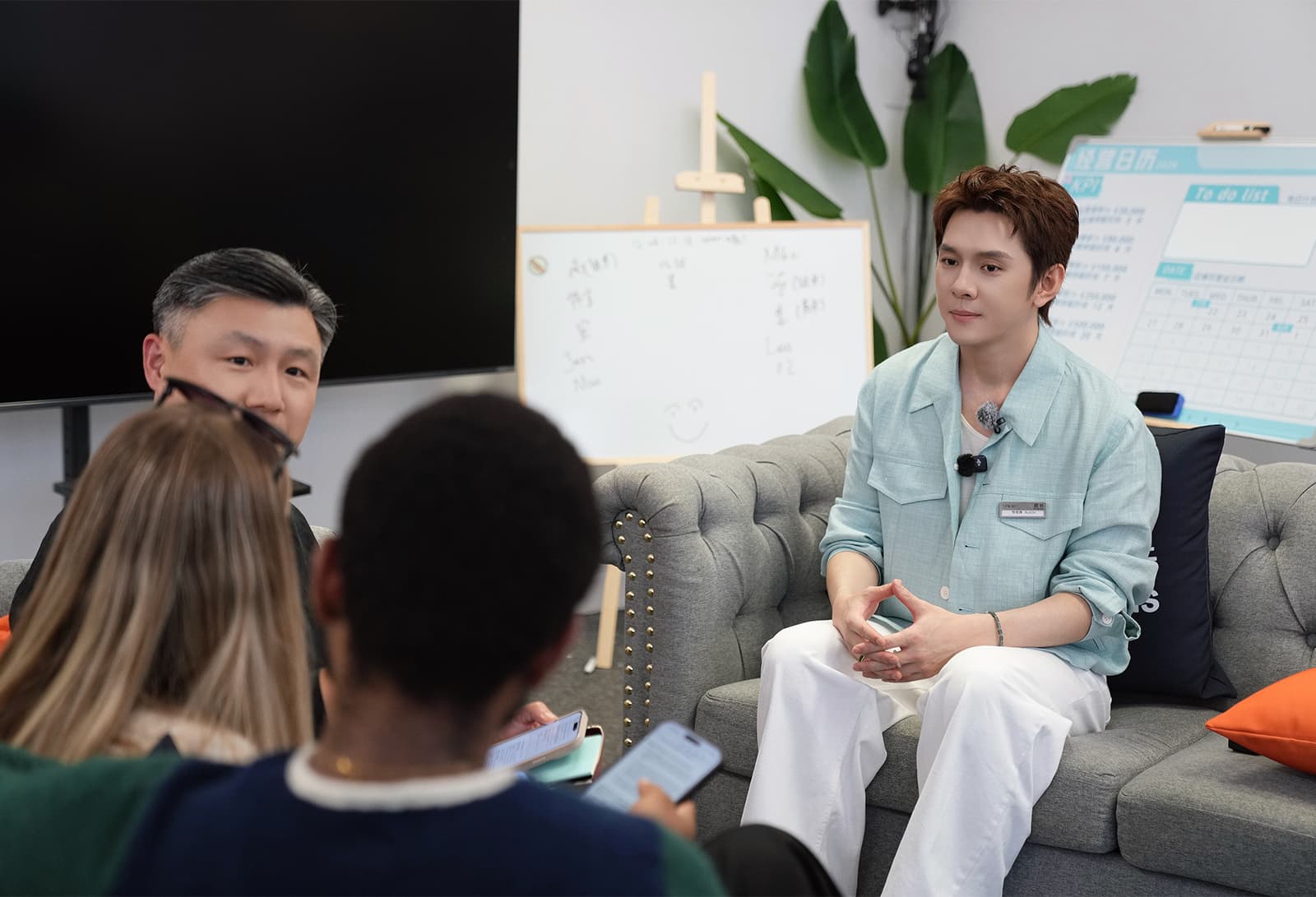
BeautyMatter recently covered Partner Season II, the Hunan Satellite TV and Mango TV docuseries pairing six celebrity partners with a real, functioning C-beauty retail concept. In its second season, the show has moved from Paris to London, with Li Jiaqi’s (Austin Li) team commissioning market research to understand how London shoppers discover and repurchase beauty products before opening YanLab in Fitzrovia. As the report laid out, the show’s ambition isn’t a single hero brand going viral but an attempt to build international recognition for C-beauty as a category, shifting the conversation from what China can manufacture to what Chinese brands can represent globally.
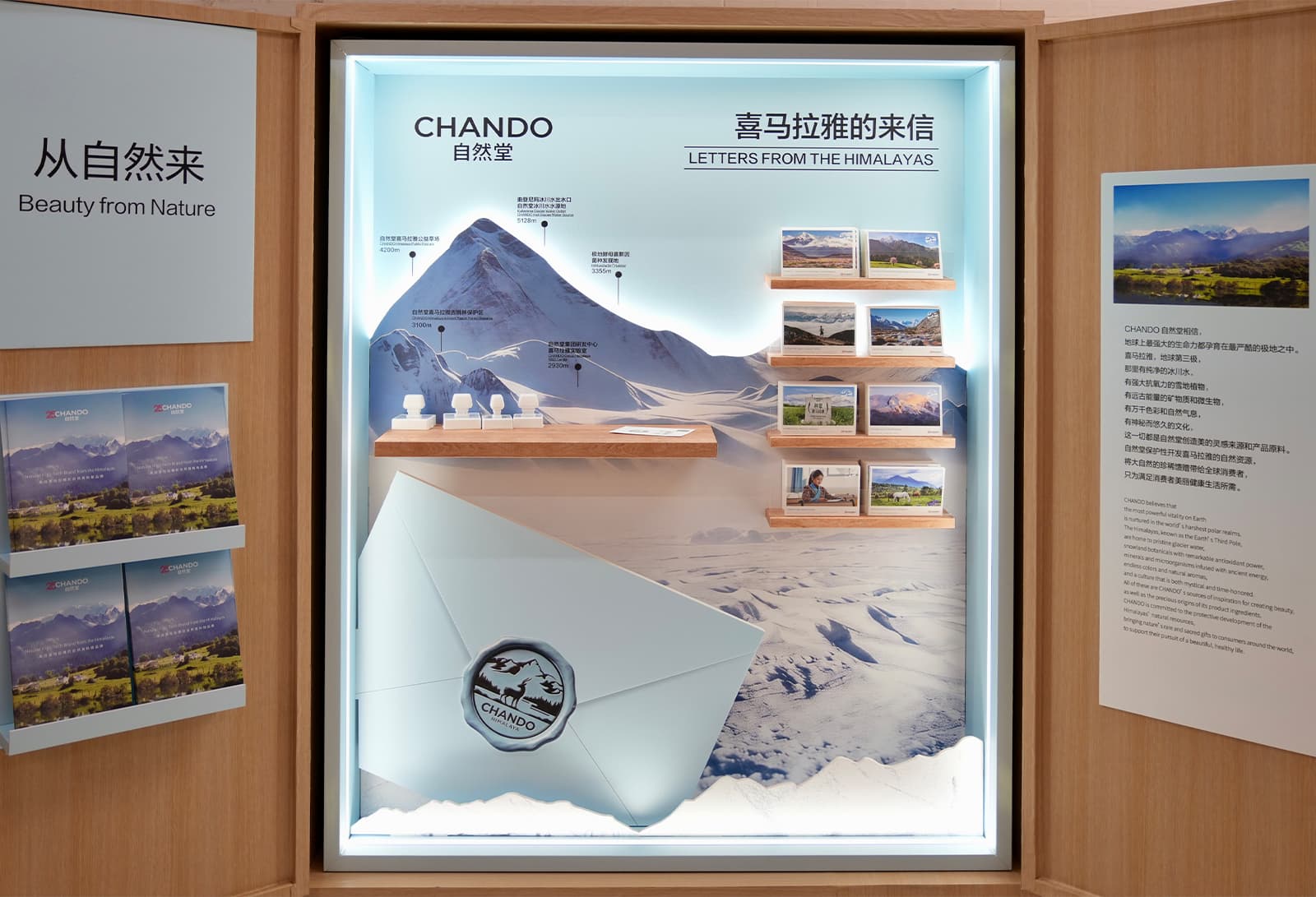
That category-level thesis played out differently brand by brand. While BeautyMatter’s previous coverage examined the show’s premise and the talent’s perspective on localization, this profile goes brand side: the funding, the revenue, and the specific bets each of the 14 participating companies is making on what global C-beauty should look like. These brands include Uniskin, Proya, Pechoin, AromeManpo, Herbeast, Perfect Diary, Komfymed, Winona, Aoxmed, Bixdo, Passional Lover, Marubi, Chando, and Kans. Six of them spoke with us directly.
Founded in 2018 by physician and molecular biologist Dr. Du Le, Uniskin develops anti-aging skincare built on a proprietary Chinese-skin database and R&D system. The brand has raised multiple rounds of funding: a Series A of over RMB 100 million ($14.77 million) closed in 2021, followed by a Series B exceeding RMB 100 million ($14.7 million) led by MSA Capital, with VMS Asset Management also participating, capital earmarked for offline expansion and R&D.
In Partner Season II, Uniskin framed its participation as a science-credibility play rather than a sales push. Le told BeautyMatter that its goal is “to gain recognition on the global stage through internationally recognized principles, rather than being confined by domestic competition.” The brand believes its data can help it stand apart. “We have built a database of more than 150,000 skin aging cases, identified 50+ skin aging targets, developed 72+ proprietary ingredients and biotechnology innovations, and accumulated six years of clinical application experience in medical aesthetics.”
When it comes to differentiating from ingredient trends already familiar to Western consumers like PDRN, popularized by K-beauty, he said, “The advantage isn’t ingredient ownership but elevating brand competition from ‘ingredient ownership’ to ‘scientific definition capabilities.’” Le believed that one brand’s progress can help the collective industry when it comes to building a global C-beauty industry. “Although these capabilities may appear to belong to individual companies, collectively they will shape global consumers’ overall trust in C-beauty,” calling for shared standards on “research transparency, efficacy validation, sustainable practices, and compliance with international regulations.”
Proya is China’s largest listed cosmetics group by scale. Founded in 2003 by Hou Juncheng in Hangzhou, the company has been listed on the Shanghai Stock Exchange since 2017. FY2025 revenue came to RMB 10.6 billion ($1.6 billion), down 1.7% year-over-year and below analyst estimates of RMB 11.1 billion ($1.64 billion), with net income falling 3.5% to RMB 1.5 billion. The company has since announced plans for a secondary Hong Kong listing, explicitly intended to fund overseas expansion and secure offshore financing, a strategic backdrop that gives its YanLab participation real balance-sheet weight and not only marketing spend.
Antoine Deconinck, the General Manager of Proya European Innovation Center and Managing Director of Proya Europe, called the London store “an important milestone” and “a significant moment in C-beauty’s transformation from ‘product export’ to ‘brand globalization.’”
The brand’s stated dual objective is to enter the mainstream European market and establish a premium brand perception, reshape the global perception of C-beauty’s value, and lean on what Deconinck described as “a China–Europe dual R&D system with formulations strictly aligning with EU regulatory standards.”
On trust building, he was candid about the category’s core challenge. “The key challenge for Chinese beauty brands expanding overseas is not product capability itself, but how to establish a new, professional, and comprehensive global brand perception.” He positioned the multibrand YanLab format as a turning point, moving from individual breakthroughs toward collective growth, crediting Li Jiaqi’s industry influence and global resources with uniting brands that historically explored overseas markets independently.
Proya proposed three shared standards for the global development of C-beauty: evidence-based scientific research as the foundation, value enhancement as the driver of industry advancement, and long-term localized development as the pathway to global growth.
Founded in 1931 in Shanghai by Gu Zhimin, Pechoin is widely regarded as one of China’s first domestic skincare brands and posted RMB 17.7 billion ($2.6 billion) in revenue in 2019. Pechoin is the only Chinese brand to have been ranked among the Top 15 global cosmetics brands by brand value in Brand Finance’s global cosmetics brand ranking for multiple consecutive years, with seven awards from the International Federation of Societies of Cosmetic Chemists (IFSCC) received since 2017.
Pechoin’s goal in London is explicitly heritage-driven: to build on its 95-year heritage and showcase the unique value of Eastern aesthetics and herbal technology-driven skincare, according to Yan Xia, Pechoin’s General Manager of shelf-based e-commerce. He pointed to its 2025 Lingyu Collection, a collaboration with Suzhou jade-carving heritage craftsman Cheng Lei, inspired by the Neolithic Liangzhu Jade Cong artifact as proof that innovating through heritage is a living strategy, not nostalgia marketing.
“Chinese beauty brands are not ‘Eastern alternatives to Western skincare’ but rather an independent skincare category with complete scientific foundations.” She warned that brand expansion does not equal category expansion and called for industry-wide quality standards, arguing that a problem at one brand could damage C-beauty’s global reputation.
When it comes to brand storytelling, Xia described Pechoin’s strategy as converting historical depth into trust, including using a traditional gifting culture as “a communication bridge” for Western audiences.
Hangzhou-based fragrance brand AromeManpo, founded in 2014 by Jiang Teng, fuses aromatherapy with proprietary biofermentation. It secured a tens-of-millions-RMB angel round in 2023 exclusively from Cathay Capital’s Consumer Co-Creation Fund, the fund’s first skincare investment, followed by a pre-Series A/Series A close in January 2025 from NX Fund, Cathay Capital, and Challenjers Venture, with full-channel GMV reaching 600 million RMB in 2025. In May 2026, Eternal Holdings, China’s first publicly listed perfume company, took a 15% stake via its China subsidiary.
Alec Jiang, founder of AromeManpo, positioned its role in YanLab as aiming to move beyond the traditional perceptions associated with Chinese beauty brands. The strategy focuses as much on cultural positioning as on product formulation. “AromeManpo represents a new interpretation of fragrance, botanical ingredients, and the integration of Eastern and Western cultures,” and Jiang argued that Western consumers “place greater emphasis on a brand’s lifestyle expression, philosophy, and cultural values than on ingredient claims alone.”
Of its core point of difference, Jiang said, “the core competitiveness of AromeManpo has never been limited to skincare efficacy alone,” describing instead a complete sensory experience that integrates fragrance, skin feel, and emotions, which he argued suits experiential offline shopping habits already common among European consumers.
AromeManpo said collective exposure lets Chinese brands “establish differentiated positioning alongside K-beauty, European, and American beauty brands.”
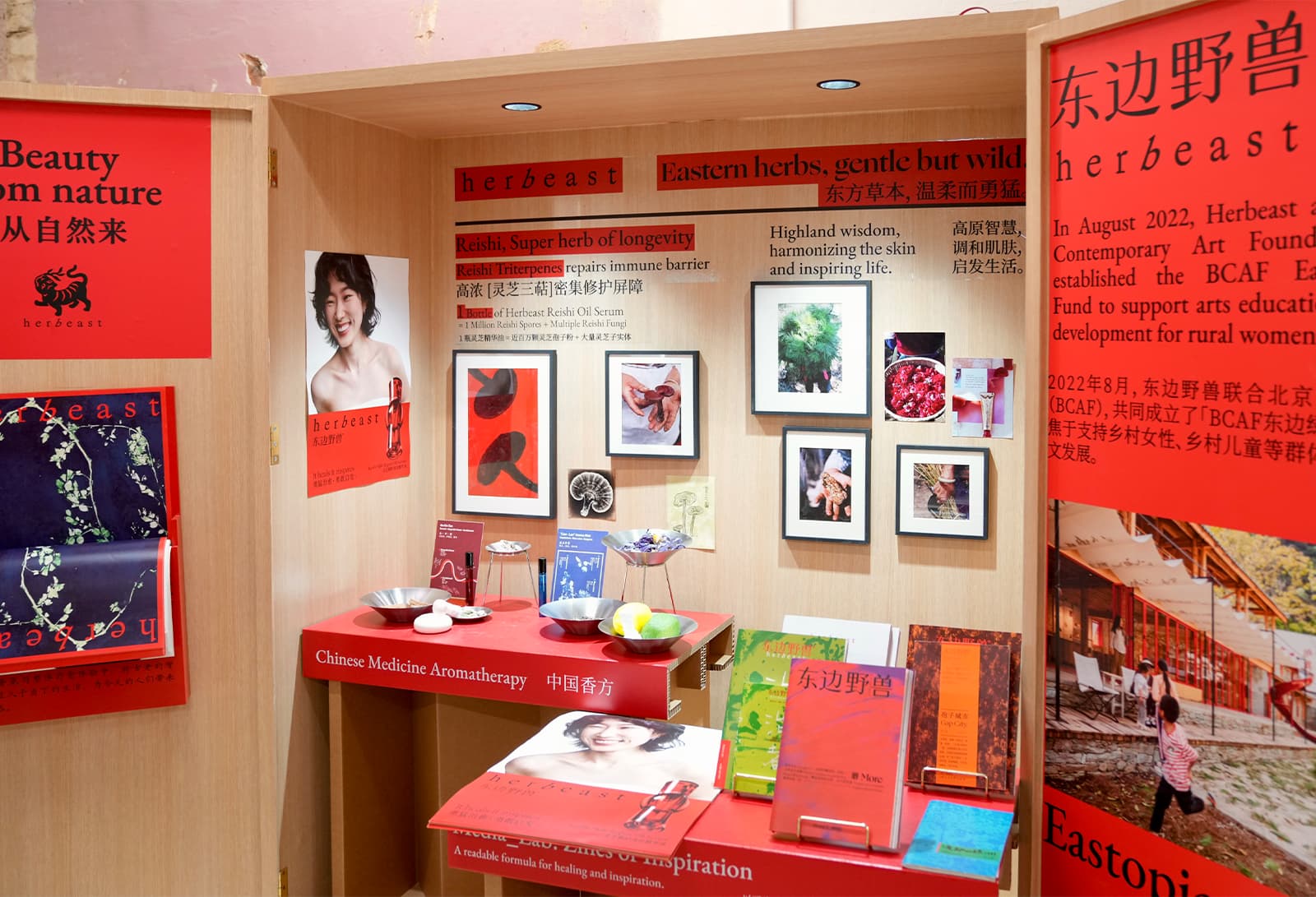
Shanghai-founded Herbeast (2020) sits at the prestige end of C-beauty. Founder Yisa He previously worked in beauty retail in Paris and at top Chinese retailers. The brand retails between RMB 500 and RMB 1,000 ($73.9 and $147.8) and is the only C-beauty label stocked at Joyce Beauty, a Hong Kong-based luxury beauty retailer, alongside Augustinus Bader and 111Skin. It has raised seed-stage backing from Lightspeed Venture Partners. In 2022, it partnered with the Beijing Contemporary Art Foundation (BCAF) on the BCAF East Oasis Specialty Fund, supporting rural arts education.
He said that Herbeast’s participation in Partner Season II was valuable for brand validation and distribution. “[It was to] explore and validate whether a brand truly rooted in Chinese herbal wisdom and contemporary lifestyles can build authentic understanding cross-culturally.” She rejected treating herbal heritage as being solely valuable for aesthetic purposes, such as packaging. “It should not merely be a traditional knowledge system preserved and displayed, nor should it exist only as a cultural symbol on packaging.”
Of building consumer trust, the brand distinguished curiosity from conversion. “International consumers are often familiar with Eastern herbal traditions and may even approach them with curiosity. However, curiosity does not automatically translate into trust,” He said. The brand’s Lingzhi Collection, for example, blends tradition with research into lingzhi (a type of mushroom) triterpenes and lingzhi polysaccharides for barrier support.
He believes that when it comes to growing the C-bBeauty category, a diversity of offerings is key. “C-bBeauty should not be defined by one visual symbol, one interpretation of Eastern aesthetics, or one fixed cultural narrative,” He explained.
Perfect Diary’s parent company, Guangzhou-based Yatsen Holding, was founded in 2016 and became the first Chinese beauty company to list on the NYSE in November 2020. Its portfolio now spans Perfect Diary, Little Ondine, Pink Bear, Galénic, DR.WU, and Eve Lom. Its FY2025 total net revenue rose 26.7% to RMB 4.30 billion ($614.6 million), with fourth-quarter revenue up 20.1% to RMB 1.38 billion, driven by a 63.5% jump in skincare-brand revenue, a segment increasingly offsetting slower color-cosmetics growth. In September 2020, it raised $4 billion, after getting a $100 million infusion in April of the same year.
Yatsen Group’s Director of PR, Tingting Peng, called its YanLab presence “an important practice for Chinese beauty brands going global, useful for building greater confidence in its continued overseas market development.” Its core message positions it as a next-generation professional beauty brand that combines makeup performance with skincare benefits.
Peng rejected the assumption that Chinese products can only compete on price or marketing narrative alone. “The strength of Chinese beauty is not created by storytelling alone; it is refined through rapid iteration in an ultra-large-scale market,” Peng said, pointing to products tested by “tens of millions of users.” She framed the in-store trial as the real proof point. “Once they try the products on their faces, they will be able to judge for themselves.”
Of the benefit of appearing alongside other C-beauty brands, Peng argued that clustering shifts perception from individual brands testing the waters to C-beauty speaking as a collective, presenting a real shift from the impression of Chinese manufacturing to Chinese innovation. She proposed three shared baselines: competing on technology-driven beauty innovation, balancing localized aesthetic adaptation with a Chinese cultural core, and holding a common golden baseline for safety and compliance.
Across heritage houses, biotech disruptors, publicly listed giants, and prestige indies alike, the six brands converged on the same thesis: C-beauty’s next phase is not about proving it can manufacture but about proving it can define a category.
What Partner Season II offers each of them moves beyond a single retail moment into a controlled, on-camera stress test of whether Western consumers will pay premium prices for Chinese formulations and Eastern brand narratives rather than treating either as a novelty. Whether that wager pays off will show up less in this season’s viewership numbers than in whether YanLab’s London shoppers are still buying these brands and recommending them, a year from now.

Want to continue reading this article and others just like it?
Subscribe to BeautyMatter and access the most current beauty intelligence and news updates.
SubscribeAlready a member, login here.